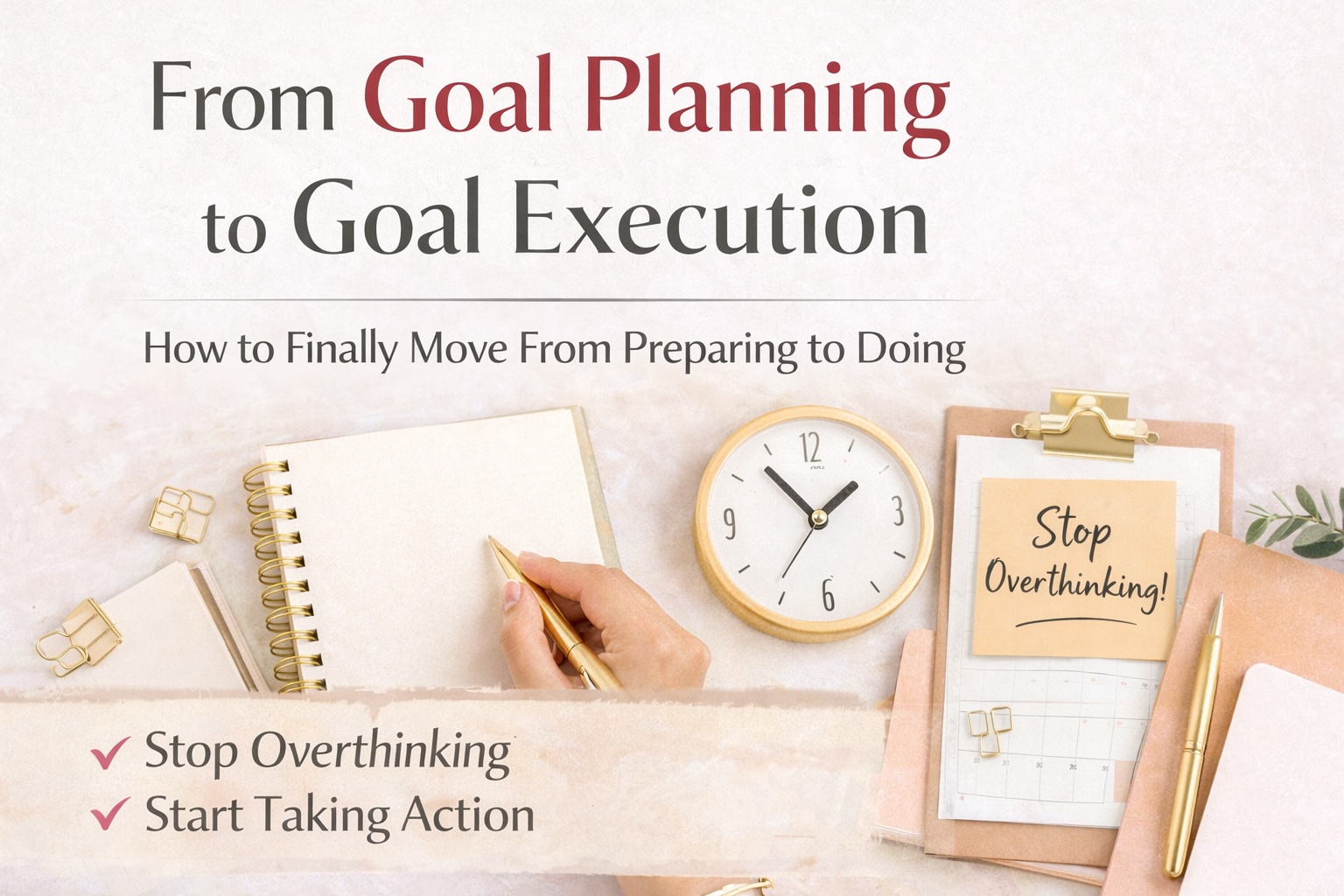
December and January are my favourite months for dreaming.
This year alone, I joined several goal-planning sessions, blocked out retreat days, journaled extensively, mapped out my year in colour, and sat with my goals from every possible angle. On paper, it looked like progress. It felt productive, and even felt wise.
And then it hit me.
For all that clarity, reflection, and beautiful planning…very little had actually moved.
That’s when I realised something uncomfortable but important: it’s possible to be deeply committed to planning your goals, and still delay the one thing that makes them real.
Execution.
If you’ve spent the last few weeks thinking, writing, revising, and refining your goals, this post is for you.
The Hidden Comfort of Goal Planning
Let’s be honest, planning feels good. Planning gives us:
- A sense of control
- The illusion of progress
- A safe distance from failure
There’s no risk in writing a goal down, neither is there exposure in refining it. Especially at the beginning of the year, planning is celebrated. Vision boards, planners, goal-setting sessions, retreats — all good things. Necessary things, even.
But if we’re not careful, planning becomes a place we camp, not a place we pass through.
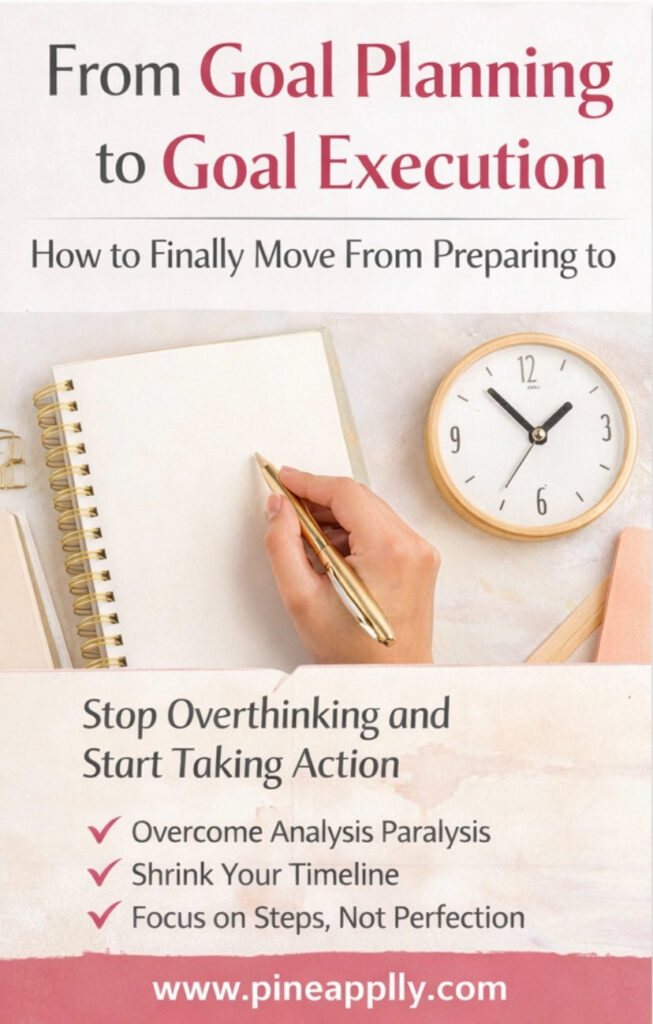
When Planning Starts to Replace Progress
At some point in January, I noticed I was still “preparing” instead of doing. I told myself:
- “I just need a bit more clarity.”
- “Let me think this through properly.”
- “I’ll start once everything feels aligned.”
But what I was really doing was postponing action.
This is where planning subtly shifts into procrastination, not because we’re lazy, but because planning feels responsible. It feels like obedience to the process. It feels like wisdom.
Yet the truth is this: The best-laid plans are still inferior to imperfect action.
The Problem With Analysis Paralysis
Another trap many of us fall into this time of year is analysis paralysis. We overthink:
- Which goal matters most
- The “right” order to pursue them
- The perfect strategy
- The ideal timing
We analyse ourselves into stillness.
And while reflection is valuable, too much analysis without movement slowly erodes momentum. The longer we stay in our heads, the harder it becomes to start.
Clarity is meant to serve action, not replace it.
Why Execution Is the Real Work of Goal Setting
Here’s the part we don’t talk about enough:
Execution requires courage.
Planning is private while execution is visible. Execution asks you to:
- Try before you feel ready
- Be inconsistent at first
- Adjust in real time
- Risk finding out what works and what doesn’t
No amount of planning can protect you from the discomfort of beginning. And maybe that’s why we linger there.
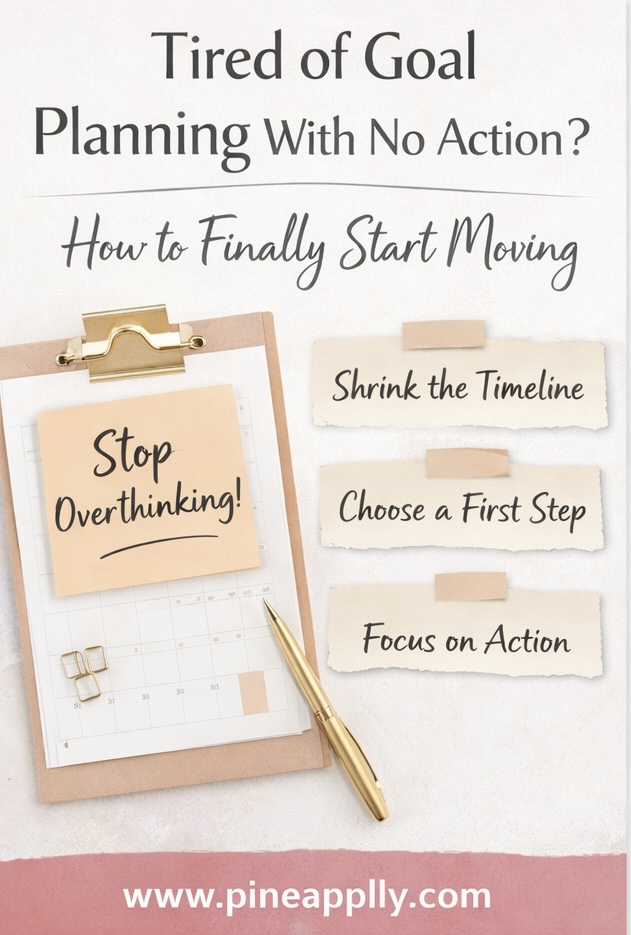
Planning + Action: The Better Way Forward
I’m not anti-planning. Far from it. What I’ve learned — and am actively practicing — is this:
Planning and action must run in parallel.
A healthier rhythm looks like:
- Plan just enough to create direction
- Act quickly on what you already know
- Review and refine after movement begins
Instead of asking, “Is this the perfect plan?”
Ask, “What is the next action I can take this week?”
That shift alone changes everything.
Develop a Bias Toward Action
A bias toward action doesn’t mean being reckless or unprepared. It means choosing movement over endless refinement. It means:
- Starting before you feel fully confident
- Acting on 70% clarity instead of waiting for 100%
- Trusting that momentum will teach you what planning can’t
Most progress isn’t unlocked by better plans, it’s unlocked by participation.
How to Gently Move Yourself Into Execution Mode
If you feel stuck in planning right now, try this:
- Choose one goal to actively work on
Not refine or rethink, but work on. - Define the smallest executable step
You don’t have to identify the full roadmap, just the next honest action. - Set a short execution window
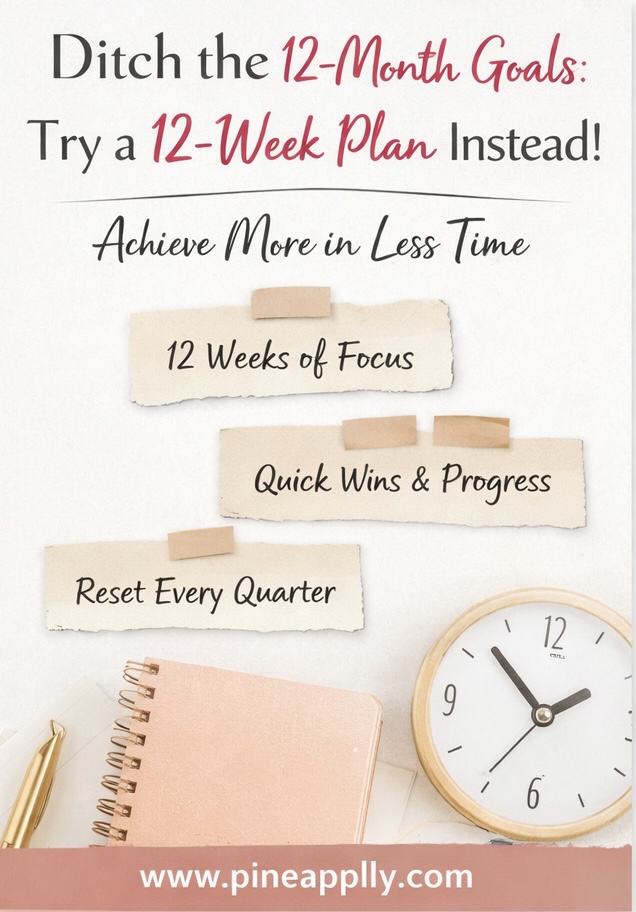
A 12-week or 90-day focus creates urgency and clarity without overwhelm. Get my workbook here to make this process easier. - Expect imperfection
Execution is feedback, not failure.
Planning Seasons End — Action Seasons Begin
There is a time to dream, reflect, and map things out, and there is a time to move.
If you’ve been faithful in the planning season, this is your gentle nudge:
Don’t abandon your goals by staying in preparation.
Let planning give way to participation.
Let clarity give way to courage.
Let intention give way to execution.
Because in the end, the life you want isn’t built in your notebook; it’s built in the daily, imperfect, courageous act of showing up.
One response to “From Goal Planning to Goal Execution: How to Stop Preparing and Start Doing”
-
This is an excellent read and very relatable. This year I have been working on taking action. It’s easy to “plan” goals but only people who take actionable steps towards making progress will really achieve their goals.





























Leave a Reply